|
THE
CANDIDATES
Click on
the candidate's photo to view biography
and vision statement
|
|
|
Kerry
Green, PhD
Assistant Professor
Department of Public and Community
Health
University of Maryland |
Keryn
E. Pasch, PhD, MPH
Assistant Professor
Department of Kinesiology
and Health Education
University of Texas, Austin |
DOWNLOAD
NOMINEES' BIOGRAPHY AND VISION STATEMENT
(PDF)
| |
| 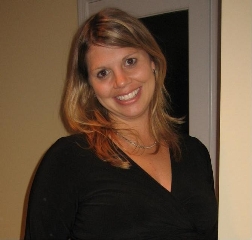 Kerry
Green, PhD Kerry
Green, PhD
Assistant Professor
Department of Public and Community
Health
University of Maryland
Kerry M. Green
is an Assistant Professor
in the Department of Public
and Community Health at the
University of Maryland School
of Public Health in College
Park, Maryland. She received
her PhD in Public Health from
Johns Hopkins Bloomberg School
of Public Health (JHSPH) in
2004 and her MA in Human Development
from the University of Maryland
in 2000. She also completed
a two-year post doctoral fellowship
in Prevention Science in the
Department of Mental Health
at the JHSPH under the mentorship
of Nicholas Ialongo.
Dr. Green’s work focuses
on development over the life
course, and in particular
how early family, school,
and environmental influences,
as well as individual risk
behaviors affect later health
and well-being. She is particularly
interested in mental health
outcomes. Her work focuses
on gender and racial differences
in development. Much of her
research has been with low-income,
urban community populations
followed longitudinally, and
thus health disparities are
a key topic of her research.
She has experience with the
implementation and evaluation
of school-based intervention,
and is particularly interested
in university-community partnerships
for implementing preventive
interventions. She is skilled
in advanced statistical techniques,
in particular propensity score
matching and latent variable
modeling.
Vision Statement:
I am honored to be nominated
as Chair-Elect of the Early
Career Prevention Network
(ECPN). I have thoroughly
enjoyed my membership in ECPN
and participation on the Steering
Committee. I have also benefited
greatly from my membership
with SPR since 2004. My vision
for ECPN involves continuing
to connect early career scientists
with the magnitude of resources
already available within SPR
and increasing opportunities
for early career folks to
become successful prevention
scientist.
I seem to end almost every
one of my Prevention Science
graduate class I’m teaching
this semester by reiterating
to the students that developing,
implementing, evaluating,
and disseminating programs
is hard work. ECPN is doing
a number of great things that
can help those of us early
in our careers to tackle this
hard work without reinventing
the wheel.
I have three areas that I
am particularly interested
in ECPN increasing its focusing
on over the next few years.
First, I feel strongly about
helping students, post-docs,
and early career professional
to develop collaboration with
each other. ECPN is well positioned
to increase its infrastructure
for collaborations among existing
and new members, whom ECPN
should actively recruit. I
know junior scientists can
benefit from working with
others who are dealing with
similar issues. This will
enable us to better help one
another find a high-quality
post-doctoral fellowship,
network for academic positions,
develop a K or first R01 application,
make initial community connections,
gather pilot data, figure
out a power calculation, and
all those other tasks early
career prevention scientists
need to do.
Second, I have never been
part of a membership organization
in which senior scientists
have been so dedicated to
the career development of
more junior scientists. The
mentoring opportunities within
SPR are amazing. I would like
to see ECPN work more with
the SPR board to determine
new and publicize lesser known
opportunities for training
and mentoring.
Third, I know we all struggle
from analytic and methodological
challenges when doing our
prevention work. I have been
impressed with the depth of
attention paid to methods
during the annual meeting.
I would like ECPN to explore
opportunities for connecting
early career scientists with
all the methodological resources
within SPR.
I appreciate the nomination
of Chair Elect of ECPN and
hope to continue to work with
the ECPN Steering Committee
and show my dedication to
SPR.
Return
to Top
|
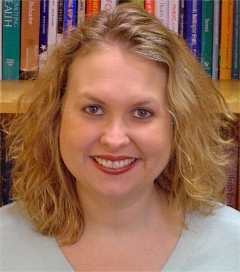 Keryn
E. Pasch, PhD, MPH Keryn
E. Pasch, PhD, MPH
Assistant Professor
Department of Kinesiology
and Health Education
University of Texas, Austin
My name is
Keryn Pasch and I am running
for the ECPN Chair-Elect
position. Currently I am
an assistant professor in
the Department of Kinesiology
and Health Education at
the University of Texas
at Austin. My research focuses
on the influence of parenting
and media on adolescent
health risk behaviors. I
have published 13 papers
with 7 more under review
and have contributed to
21 scientific presentations
in the field of Prevention
Science. I have a multi-disciplinary
training background including
Psychology (B.A.), Health
Behavior and Health Education
(M.P.H.), and Behavioral
Epidemiology (Ph.D.). Throughout
my doctoral training at
the University of Minnesota,
I was able to gain invaluable
prevention experience working
on Project Northland Chicago
with Senior Scientists Cheryl
Perry and Kelli Komro.
I have been
involved with the ECPN Steering
Committee since 2006 and
have really enjoyed working
with other early career
prevention scientists. I
believe that ECPN is a wonderful
organization, dedicated
to furthering the careers
of early prevention scientists.
If elected to this position,
I would continue to work
to build a sense of community
among early career professionals.
As a member of the steering
committee, and through my
current role as the Membership
Committee Chair, I have
helped to create and establish
the publication of ECPN
Connections, a newsletter
dedicated to furthering
a sense of community among
early career preventionists.
This newsletter has been
very successful and we have
published three issues to
date.
In addition
to community building, I
believe ECPN plays a crucial
role in the development
and recruitment of new professionals
into the field of Prevention
Science. As chair-elect
and then as chair, I would
continue to make this a
priority. This year I was
very happy to develop the
ECPN Student Poster Competition,
a competition for undergraduate
and graduate students, to
encourage student attendance
and participation in the
annual meeting, increase
student visibility at the
conference, and attract
new student members to SPR
and ECPN. In our inaugural
year of the competition
we had 35 entries. With
the generous support from
the SPR Board, we are able
to offer the top 3 posters
a $250 travel award plus
a free 1-year SPR membership,
with the remaining top 10%
of posters receiving a 1-year
SPR membership as well.
The winners of the competition
will also be recognized
at the awards ceremony.
I hope that this competition
will become a yearly event
and will help to highlight
the wonderful student members
of SPR and ECPN.
The role of
ECPN is also to create opportunities
for mentorship through several
avenues 1) among other early
career professionals, 2)
through interaction with
senior scientists, and 3)
through training opportunities.
As chair-elect and chair,
I would work to continue
creating mentorship and
training opportunities for
early career scientists.
In 2008, I was co-chair
of the ECPN Luncheon where
we highlighted the Early
Career Award winners who
shared their insights on
how to be a successful early
career prevention scientist.
This year, I am involved
in an ECPN symposium on
the NIH Loan Repayment Program,
which I hope will be very
helpful to ECPN members.
I appreciate
your consideration for this
position and hope to receive
your vote. I would be honored
to serve as the Chair-Elect
and eventually as Chair
for such a wonderful organization.
To have the opportunity
to help develop the careers
of new prevention scientists
as well as assist early
career professionals in
their journey to becoming
senior scientists, is something
I would be privileged to
do.
Return
to Top
|
|


